










Copyright © 2026 ROTER Fresh Air Technology Wuxi Co., Ltd. All Rights Reserved. Website Design by Wangke
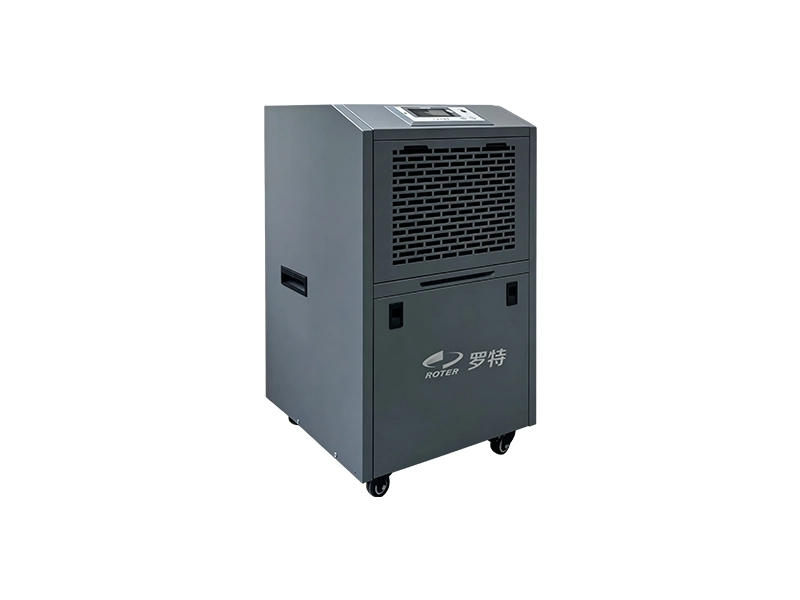
Industrial Dehumidifier
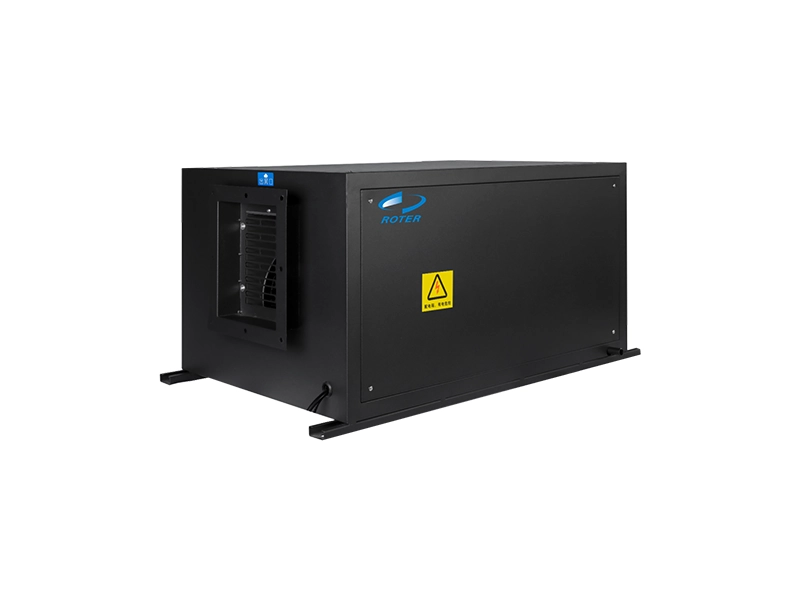
Ceiling-Mounted Dehumidifier
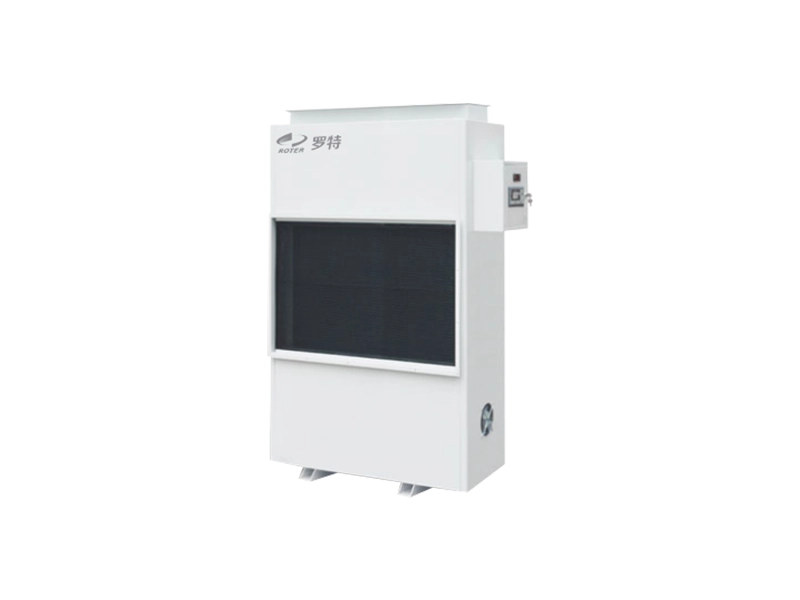
Drying Dehumidifier
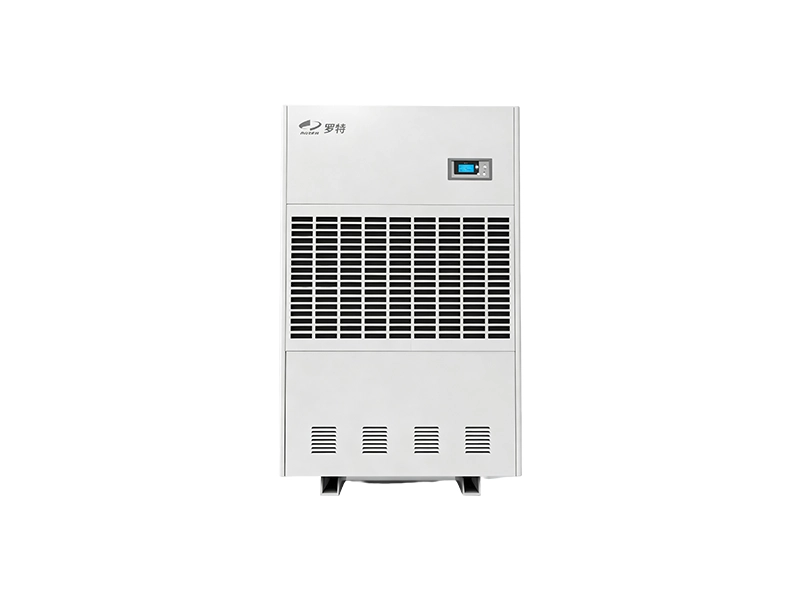
Low-Temperature Freeze-Type Dehumidifier
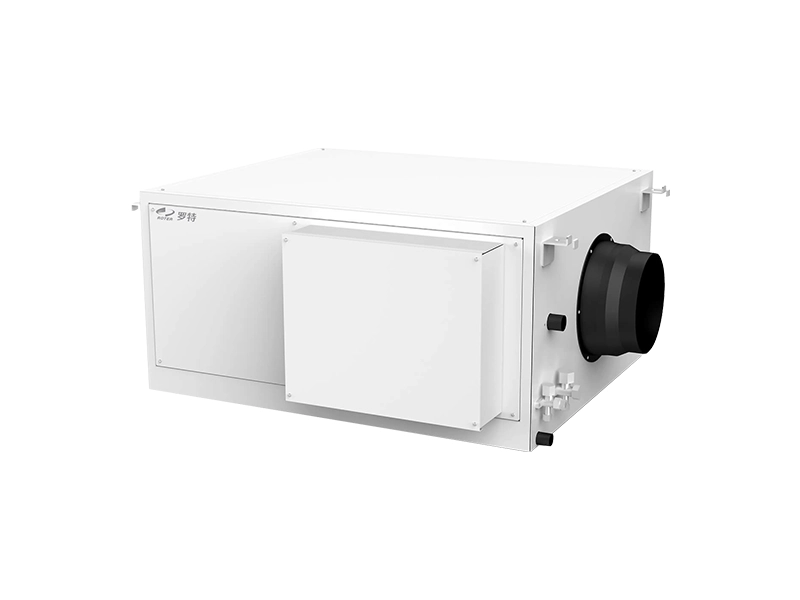
Wine Cellar Dehumidifier
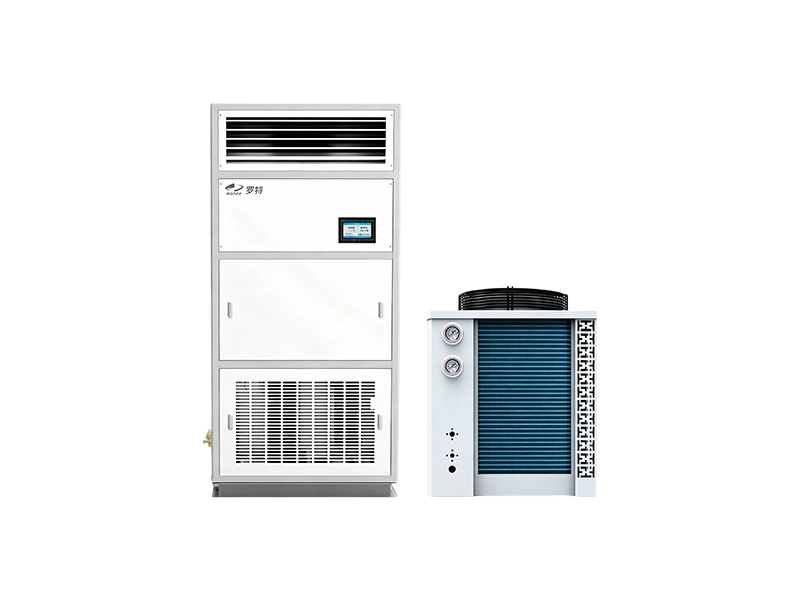
Cabinet-Type Constant Temperature & Humidity Unit
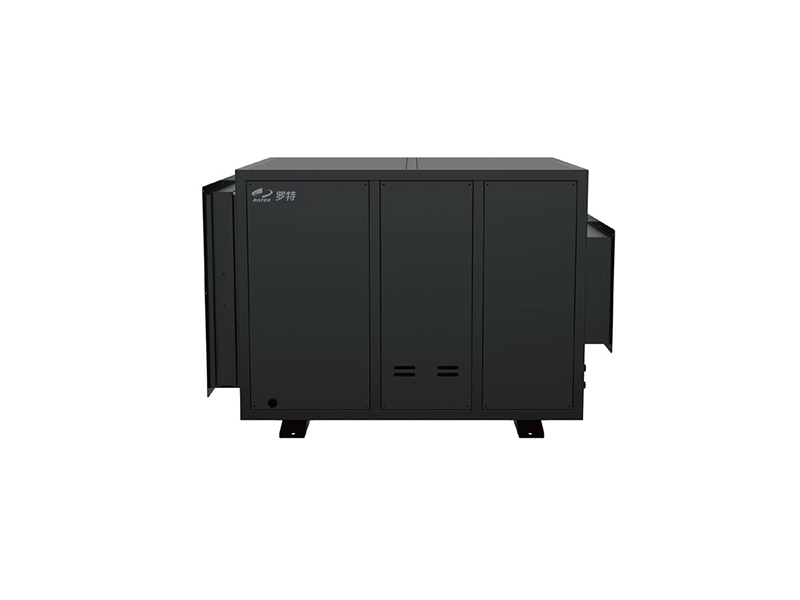
Fresh-Air Dehumidification All-in-One Unit
Industrial dehumidification is a process requirement rather than a comfort requirement. The unit has to hold a humidity band inside a production space, remove moisture from a material, or keep a stored product in condition, and in each case the equipment is chosen for the duty rather than for the room. ROTER's industrial range covers five distinct duties, from large open spaces through to drying lines and cold rooms.
The ceiling-mounted dehumidifier is applicable to villas, hotels, swimming pools, large warehouses, equipment rooms (server facilities), pharmaceutical factories and workshops. Mounting it in the ceiling keeps the floor clear in a space where forklifts or production flows would otherwise conflict with a floor-standing unit, and distributes the treated air across the full footprint rather than at one point.
The industrial dehumidifier uses a forward-curved centrifugal fan for high airflow and low noise, and covers the same applicability range: villas, hotels, swimming pools, large warehouses, equipment rooms, pharmaceutical factories and workshops. Where the space is large enough that a single unit cannot hold the band, several units are distributed and the return and supply positions are planned together.
The drying dehumidifier is used for heating and drying operations in industries such as food, chemical, pharmaceutical, paper products, leather, wood and agricultural by-product processing. Here the unit is part of a process line rather than a room appliance: the airflow, the temperature and the moisture removal rate all have to be matched to the material and to the production rate, and the unit is usually installed in a drying chamber or ducted into the process.
The low-temperature freeze-type dehumidifier is applicable to pharmaceutical cold-storage warehouses, cool-storage warehouses, cold-chain logistics facilities, seed banks, electronics storage warehouses and laboratories. It is the answer where the space is already cold: a conventional refrigeration dehumidifier loses capacity as the air temperature falls, whereas the freeze-type arrangement keeps working in the low-temperature band that storage and logistics depend on.
Refrigeration dehumidification is the economical choice in normal temperature and humidity ranges. Solid adsorption and liquid absorption work at low temperatures but use more energy. The rotary desiccant method is not affected by temperature in the same way and reaches below 1% relative humidity, which is why the low dew point wheel desiccant dehumidifier is specified for lithium battery, pharmaceutical and electronics production. For an industrial project the method follows the required dew point, the operating temperature band and the production rate.

A technology-based enterprise dedicated to air quality research and professional manufacturing of efficient and energy-saving ventilation equipment